
Which SEMAS Abacus Course Is Right for Your Child?

Choosing the right learning program can make a significant difference in how confidently a child approaches numbers. Every child develops at a different pace, so the most suitable course should match their age, current mathematical ability, attention span and previous learning experience.
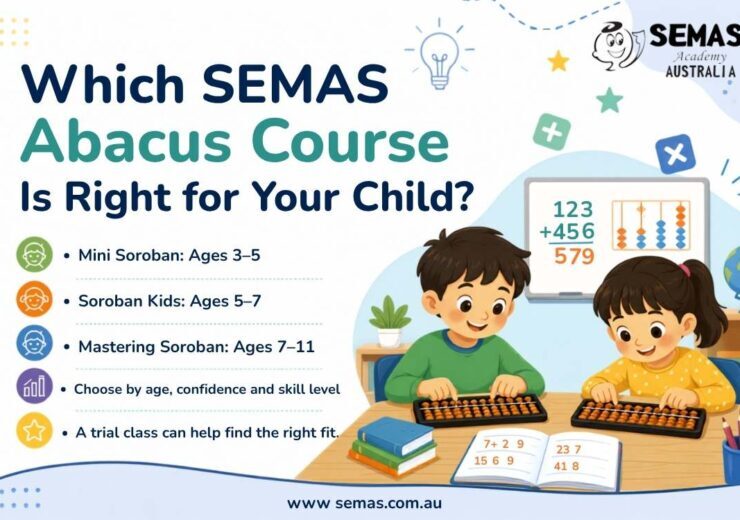
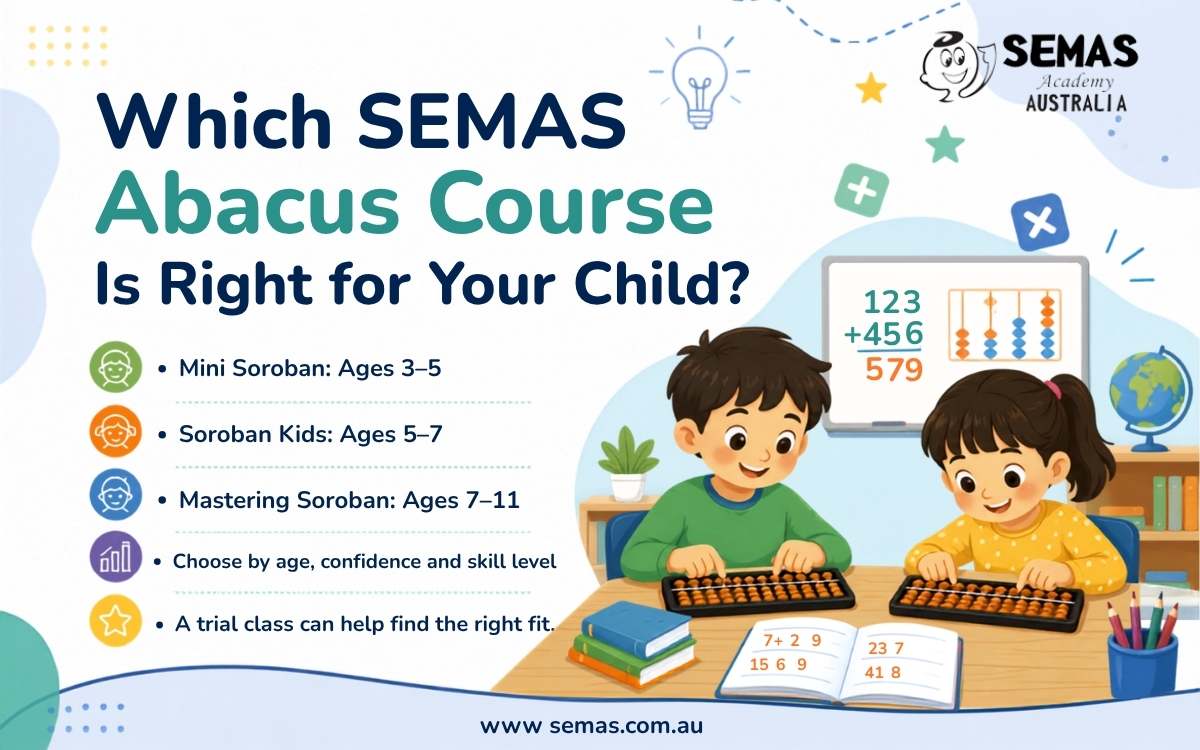
SEMAS offers structured abacus education programs for children between approximately 3 and 11 years of age. The learning pathway includes Mini Soroban for children aged 3–5, Soroban Kids for children aged 5–7 and Mastering Soroban for children aged 7–11. These age ranges provide a helpful starting point, although a child’s ability and experience should also be considered before enrolment.
Why Your Child’s Age and Ability Both Matter
Age is an important factor when choosing an abacus course because younger children generally need shorter lessons, more visual activities and additional guidance. Older children may be ready for structured calculation methods, mental visualisation and more advanced mathematical challenges.
However, age should not be the only consideration. Two children of the same age may have very different levels of confidence, concentration and number knowledge.
Parents should consider:
- The child’s age and developmental stage
- Their ability to recognise and understand numbers
- Their confidence with addition and subtraction
- Whether they have previously used an abacus
- How long they can concentrate during a lesson
- Their ability to follow instructions
- Their willingness to practise regularly
- Feedback from a qualified SEMAS instructor
A child should begin at a level where they feel supported but still appropriately challenged. Starting at the correct stage can help prevent frustration and build a more positive attitude towards mathematics.
Mini Soroban: For Children Aged 3–5
Mini Soroban is the introductory SEMAS program designed for preschool and early-learning children aged approximately 3 to 5 years.
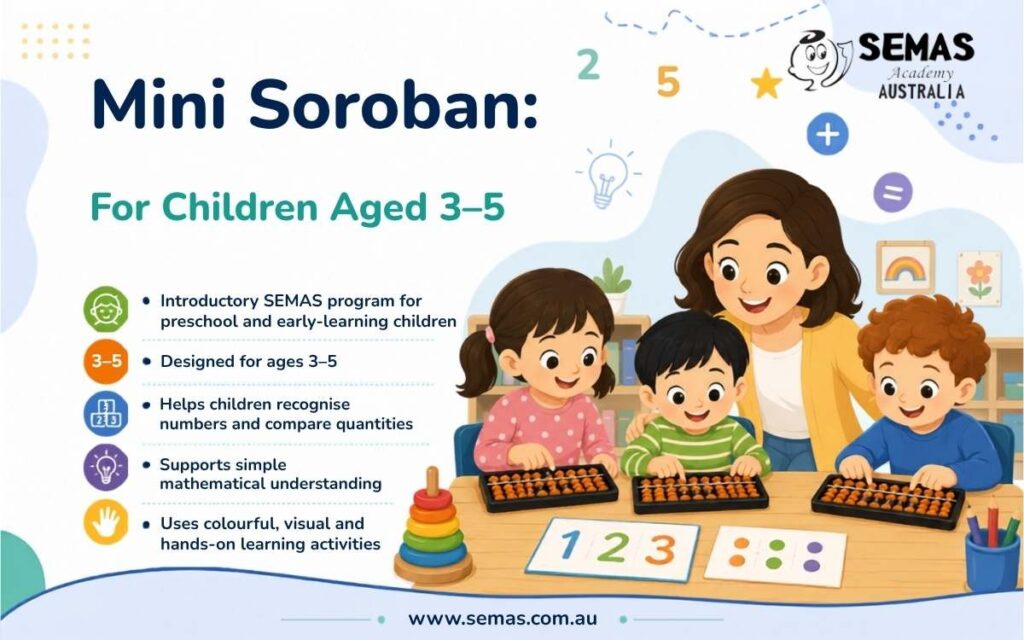
At this age, children are normally beginning to recognise numbers, compare quantities and understand simple mathematical relationships. The course introduces these concepts through colourful, visual and hands-on learning activities.
The objective is not to make young children complete difficult calculations. Instead, Mini Soroban helps them become familiar with numbers and learn how physical bead movements can represent different values.
Who Is Mini Soroban Suitable For?
Mini Soroban may be suitable for a child who:
- Is between 3 and 5 years old
- Is beginning to recognise numbers
- Enjoys hands-on games and activities
- Can follow short and simple instructions
- Is preparing for kindergarten or primary school
- Has little or no previous abacus experience
- Needs an engaging introduction to mathematics
Lessons for this age group are designed to suit shorter attention spans. Activities may involve counting, number recognition, visual matching, bead movement and simple numerical exercises.
Skills Children Can Begin Developing
Through age-appropriate instruction, Mini Soroban can help children begin developing:
- Number recognition
- Understanding of quantities
- Hand-eye coordination
- Listening skills
- Concentration
- Fine motor skills
- Confidence around numbers
- Early problem-solving ability
Mini Soroban can provide a useful foundation before a child progresses to more formal Soroban calculations.
Soroban Kids: For Children Aged 5–7
Soroban Kids is generally designed for children aged approximately 5 to 7 years. It is suitable for early-primary learners who already recognise numbers and are ready to begin structured abacus calculations.
At this age, children are often learning addition, subtraction and place value at school. Soroban Kids supports these concepts by helping learners understand how numbers are represented through bead positions and movements.
Who Are Soroban Kids Suitable For?
This course may be appropriate for a child who:
- Is between 5 and 7 years old
- Recognises numbers confidently
- Understands basic addition and subtraction
- Can participate in a structured lesson
- Can follow multi-step instructions
- Wants to improve calculation speed and accuracy
- Is ready to complete short practice sessions at home
Children entering this course do not necessarily need advanced mathematical knowledge. However, they should be comfortable with basic numbers and capable of maintaining attention during a guided lesson.
Good abacus maths instruction focuses on helping children understand each step before expecting them to calculate quickly. Accuracy, correct bead movement and number comprehension should come before speed.
What Children Learn in Soroban Kids
Students may begin learning:
- Correct Soroban bead values
- Addition techniques
- Subtraction techniques
- Number combinations
- Place value
- Calculation accuracy
- Faster number processing
- Early mental visualisation
As children become familiar with physical bead movements, they can gradually begin imagining the abacus mentally. This transition supports the development of mental calculation skills.
Why Regular Practice Matters at This Age
Children aged 5–7 generally benefit from short and consistent practice rather than long, irregular sessions. A daily routine of approximately ten minutes may be easier to manage and can help learners remember bead values and movement techniques.
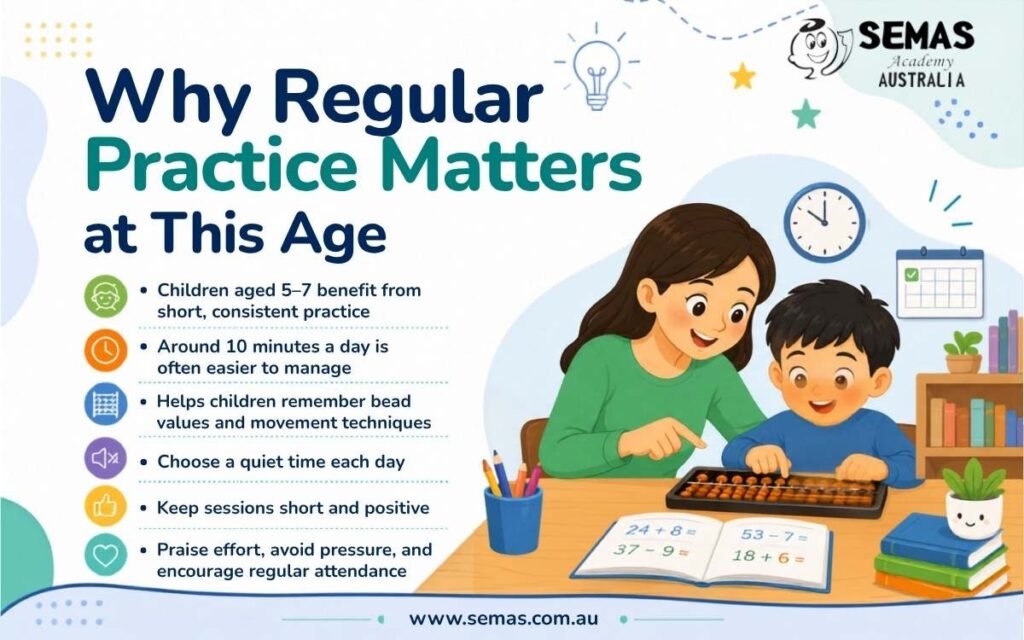
Parents can support practice by:
- Choosing a quiet time each day
- Keeping sessions short and positive
- Praising effort rather than only correct answers
- Avoiding unnecessary pressure
- Allowing the instructor to correct technical errors
- Encouraging regular attendance
Soroban Kids may be the right choice for a primary-school learner who needs a structured and visual way to strengthen mathematical confidence.
Mastering Soroban: For Children Aged 7–11
Mastering Soroban is the advanced SEMAS program, generally suitable for children aged approximately 7 to 11 years.
This course is designed for learners who already understand basic Soroban techniques and are ready to work on more advanced calculations, stronger mental visualisation and improved speed.
It is not normally the first course recommended for a complete beginner, even when the child is within the 7–11 age range. An older beginner may still need to learn foundational techniques before starting advanced work.
Who Is Mastering Soroban Suitable For?
A child may be ready for this program if they:
- Are between 7 and 11 years old
- Have completed an earlier Soroban level
- Understand Soroban bead values
- Can perform basic calculations accurately
- Are ready for more advanced mathematical operations
- Can visualise bead movements with less physical support
- Can concentrate on multi-step questions
- Want to improve mental calculation speed
What Children May Develop at This Level
Mastering Soroban may help experienced learners work towards:
- More complex calculations
- Faster mental arithmetic
- Greater accuracy
- Stronger concentration
- Independent problem-solving
- Advanced visualisation
- Improved confidence
- Competition-level calculation practice
The activities become progressively more challenging, allowing students to build on the skills learned in earlier courses.
Quick Age and Course Comparison
Mini Soroban
- Recommended age: 3–5 years
- Experience level: Complete beginner
- Main focus: Number recognition, quantities and early learning
- Best suited to: Preschool and kindergarten-aged children
Soroban Kids
- Recommended age: 5–7 years
- Experience level: Beginner to developing learner
- Main focus: Structured addition, subtraction and visualisation
- Best suited to: Early-primary-school children
Mastering Soroban
- Recommended age: 7–11 years
- Experience level: Experienced Soroban learner
- Main focus: Advanced calculations, speed and mental visualisation
- Best suited to: Children who have completed foundational training
These ages should be used as general guidelines. An instructor may recommend a different starting level based on the child’s current skills.
What If Your Child Falls Between Two Age Groups?
Some children may be close to the upper or lower limit of two courses. For example, a five-year-old may be suitable for either Mini Soroban or Soroban Kids depending on their number, knowledge, maturity and ability to follow instructions.
Similarly, a seven-year-old with no previous abacus experience may need foundational instruction before entering Mastering Soroban.
In these situations, parents should consider:
- Previous maths experience
- Number recognition
- Calculation confidence
- Concentration level
- Learning pace
- Abacus experience
- Instructor assessment
A trial class can help determine which learning environment offers the right balance of support and challenge.
Questions to Ask Before Enrolling
Before selecting a course, parents can ask:
- Is this course suitable for my child’s exact age?
- Will my child complete an initial assessment?
- What knowledge is required before joining?
- How long is each lesson?
- How much home practice is recommended?
- How is progress measured?
- When can my child move to the next course?
- Are online and classroom options available?
- Can my child attend a trial session?
Clear answers can help families choose confidently and understand the commitment involved.
Why Choose SEMAS?
SEMAS provides a structured learning pathway for children from approximately 3 to 11 years old. Its three main programs allow young beginners, primary-school learners and experienced students to learn at an appropriate stage. Families exploring age-appropriate abacus classes can choose from Mini Soroban, Soroban Kids and Mastering Soroban, with the final placement based on age, confidence, mathematical understanding and previous experience. SEMAS also offers guided instruction, structured course progression and options for different learning needs.
Final Thoughts
The most suitable SEMAS course depends on both your child’s age and current learning stage.
Mini Soroban is designed for children aged 3–5 who are beginning to explore numbers. Soroban Kids is intended for children aged 5–7 who are ready to learn structured calculation methods. Mastering Soroban is designed for children aged 7–11 who already have foundational Soroban knowledge and are prepared for advanced mental work.
Age ranges provide a useful guide, but they should not replace an individual assessment. Confidence, concentration, mathematical understanding and previous abacus experience are equally important. Speaking with SEMAS and arranging a trial session can help confirm the most appropriate starting point for your child.